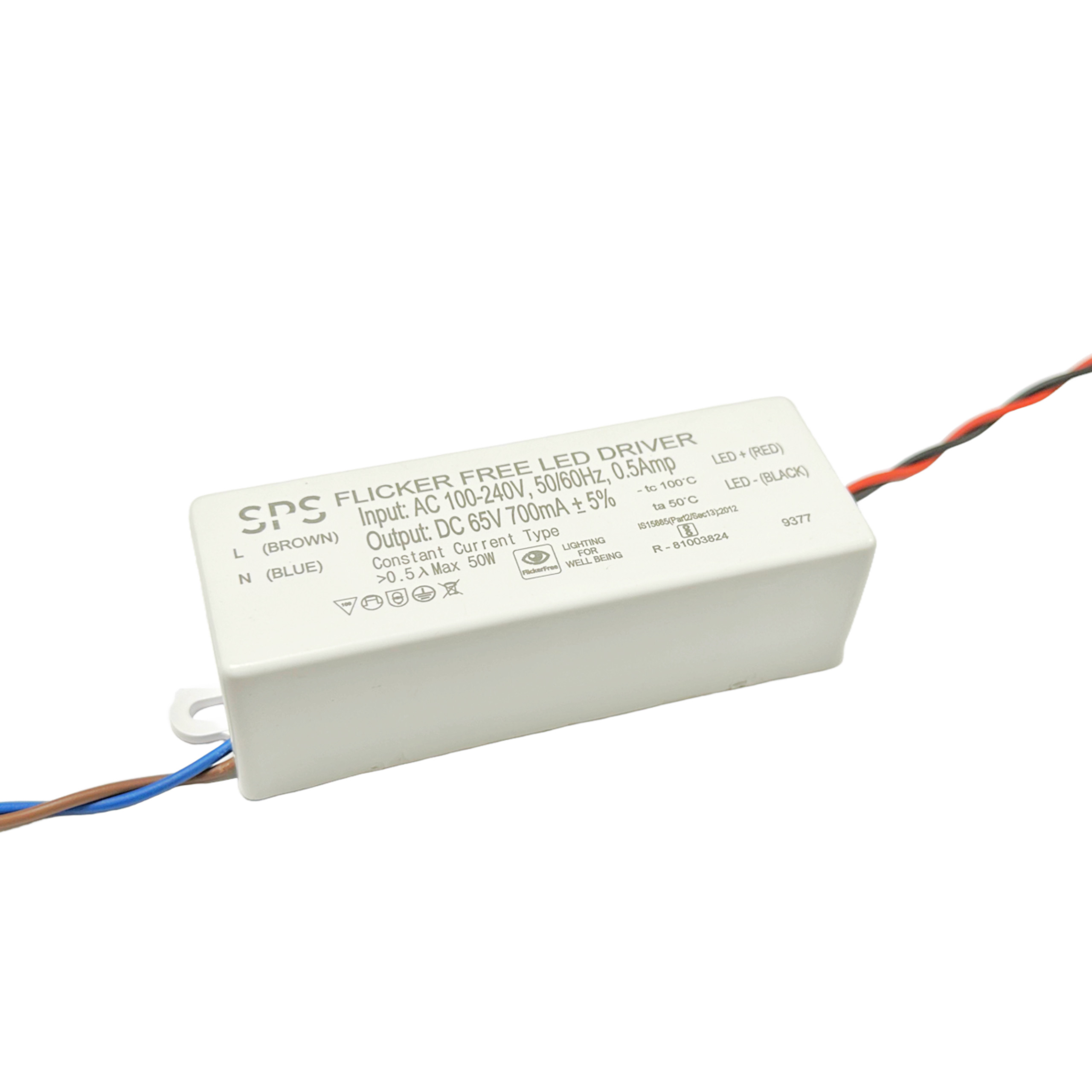
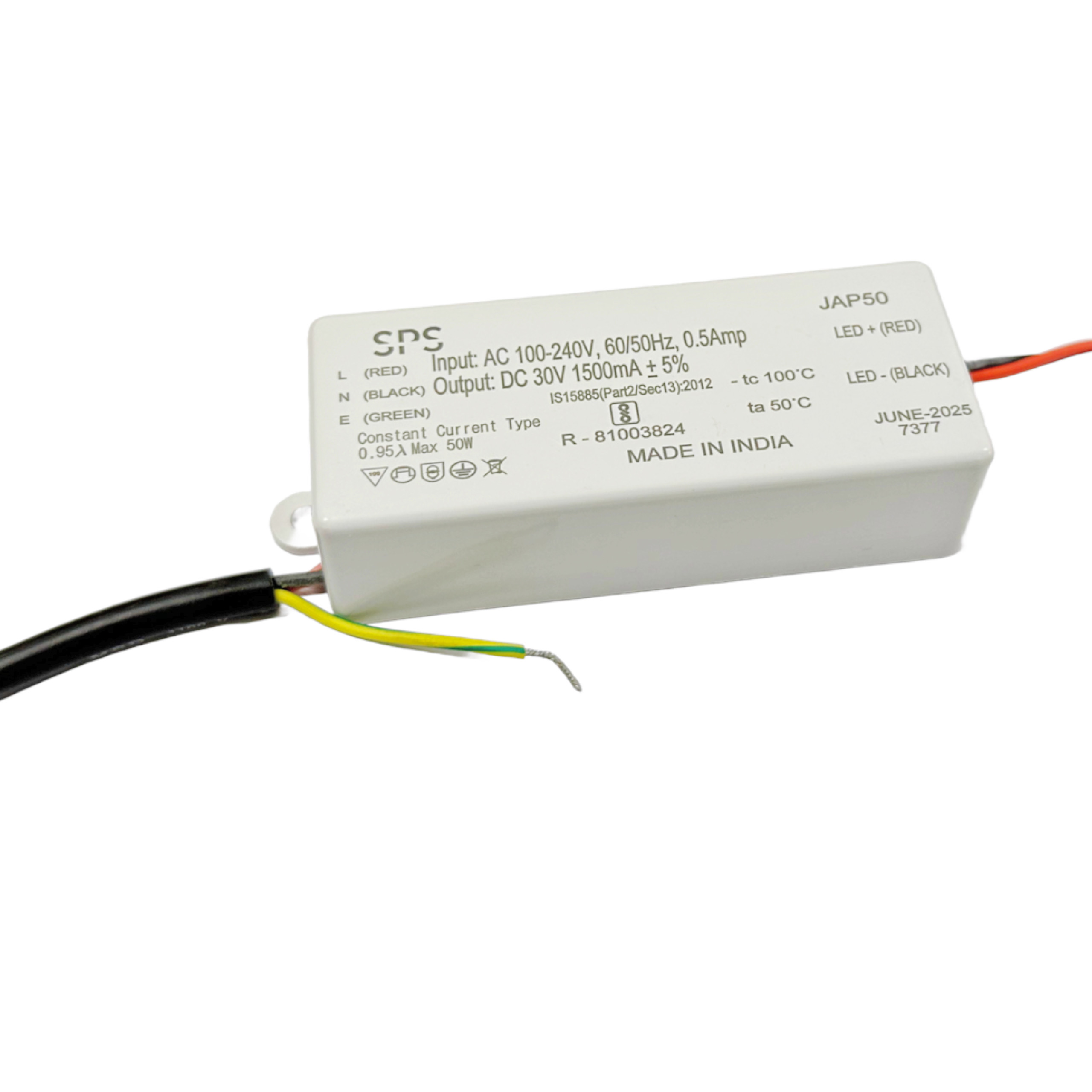
Why potted, why 50W
Outdoor LED installations face three failure modes: water ingress, thermal stress, and surge events. Non-potted drivers in outdoor housings fail most often from water ingress — even "outdoor" housings with rubber gaskets eventually let moisture in through cable glands, vent holes, or housing seams. Once water reaches the PCB, corrosion begins. Most failures we see in returned outdoor drivers are corrosion-related.
Silicon potting solves this by sealing the PCB at the component level — no air gaps, no path for moisture to reach copper traces or solder joints. The same compound is thermally conductive, so heat from components transfers efficiently to the metal housing instead of building up in trapped air pockets. Field life of a properly-potted 50W driver in outdoor installations is typically 5-10 years; field life of a non-potted equivalent in the same conditions is often under 18 months.
50W is the workhorse wattage. Smaller (10-30W) drivers are used for low-output decorative fixtures; larger (75-200W) for high-bay industrial and stadium lighting. Most outdoor street, façade, signage and floodlight applications cluster around 50W — enough output for serious illumination, small enough to fit standard fixture housings without exotic heat sinking.