How surge protection works
An SPD contains two main components: a Metal Oxide Varistor (MOV) and, in higher-rated units, a Gas Discharge Tube (GDT). Under normal voltage, both behave as open circuits — no current flows through the SPD, and the LED driver receives clean AC supply. When voltage spikes above the SPD's clamping threshold, the MOV's resistance drops sharply, diverting the surge current to ground. The GDT handles the largest, fastest transients (lightning strikes) by ionising and providing an even lower-resistance path.
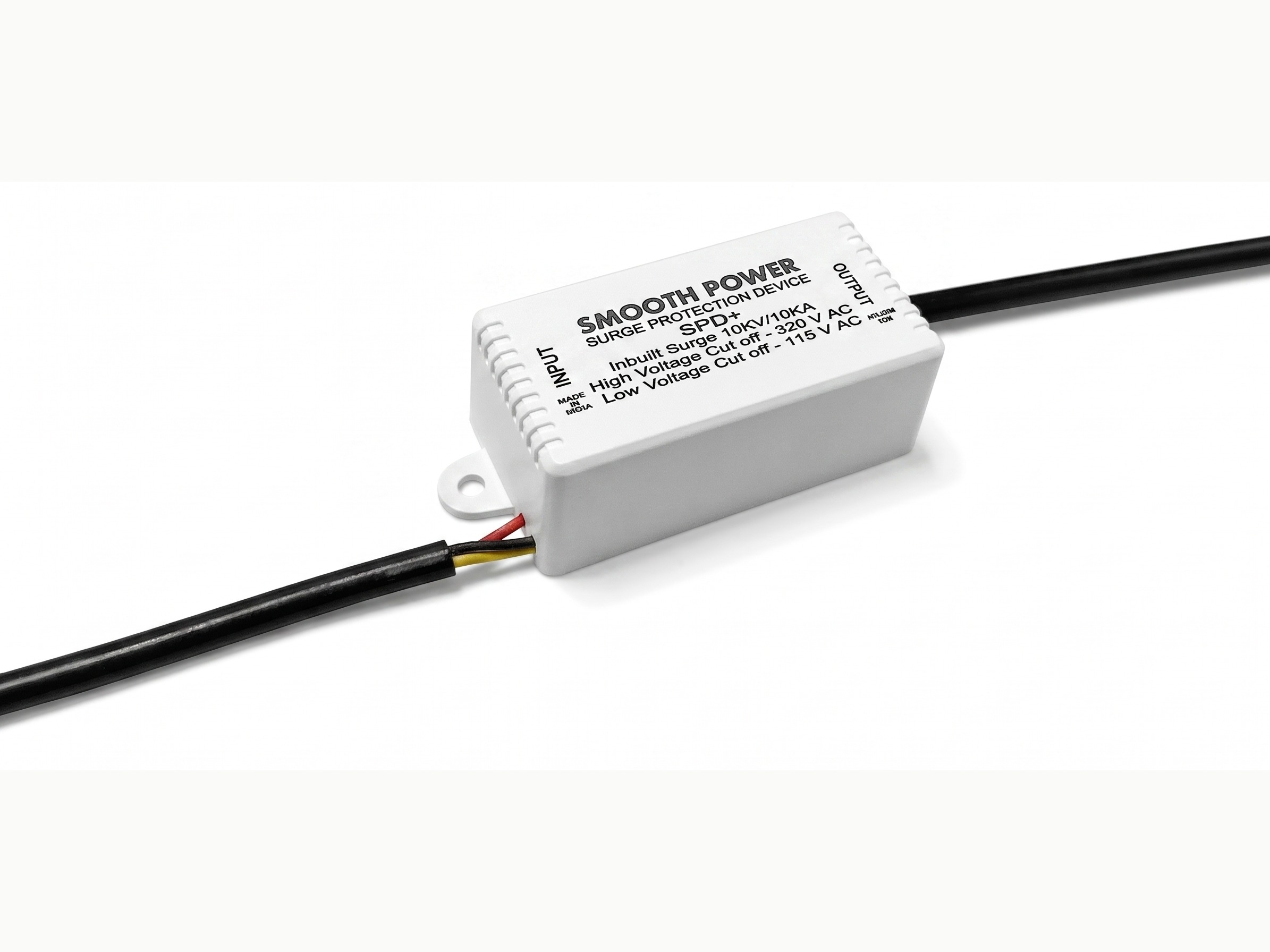
Once the surge passes (typically within microseconds), the SPD components return to high-resistance state and the LED driver continues running normally. The HV/LV cut-off in our SP-1245 adds protection against sustained over-voltage and brownout — conditions an MOV alone can't handle because they last too long.
Over their lifetime, MOVs and GDTs degrade with each surge event they absorb. After many high-energy surges, the device reaches end-of-life and must be replaced. Our SP-1448 includes a visual status indicator (a small status LED) that signals when the SPD has reached end-of-life — useful for street-lighting maintenance crews to identify which units need swapping.